Author: Anvi Bhaduri

  • Quest to a Perpetual Hourglass

    Secret to the universe’s greatest mystery

    It is the most common noun in the English language and used in a range of proverbs. It flies when we have fun and along with the tide it waits for no one. You try to race against it and often wish you had more of it. Time is one of our universe’s greatest mysteries and physicists spend their lives trying to understand even a fraction of it.

    Wouldn’t it be cool to go into the future, have a peek into your successes and failures, come back and fix it all? In theory, it is surprisingly simple; all you must do is travel at the speed of light. So, why hasn’t anyone taken a trip through time? Actually, everyone has. You, your neighbour, your local newsagent, astronauts and Usain Bolt. The only difference is how far ahead in time. This is all because of time dilation, the difference in elapsed time. Elapsed time simply means the amount of time that passes from the start to the end of an event. For example, if you had two identical clocks, one stationary and another one moving close to the speed of light, the moving clock seems like it is measuring a shorter time or moving more slowly relative to the stationary clock. This applies to other bodies as well. Humans have an internal clock and the faster they move, the slower their internal clock runs, allowing them to travel forwards in time.

    For instance, if you race against Usain Bolt in a 100m race, he will reach the finish line a couple of seconds before you do, well, assuming you are really fast! This means he has reached the future quicker than you have as he has travelled a fraction of the speed of light faster than you. The closer you go to the speed of light, the more apparent are the effects of time dilation. Astronauts aboard the ISS, which travels at 0.000002% the speed of light, experience time dilation on a measurable scale. Astronauts coming back from a 6-month mission are actually 0.007 seconds ahead of us. As the average human reflex speed is 0.21 seconds, this doesn’t make a massive difference. However, some cosmonauts like Oleg Kononenko, a Russian astronaut who has spent a whopping 1111 days in space might be a couple of seconds, ahead in time.

    If you (a person who hasn’t experienced time dilation on a measurable scale) and Kononenko were standing next to each other at a shooting range, Kononenko would see each shooter hit their target 2-3 seconds before you do. Depending on the distance between the shooter and the target, he may see the target being hit before the shooter has pulled the trigger!

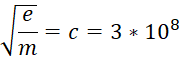
    If a person is able to travel a couple of seconds into the future, then how hard could a couple of years be? Unfortunately, Einstein has made that quite difficult due to his special theory of relativity which states that the speed of light in a vacuum is the same for all observers. This is also where his very famous equation E = mc2  comes from. This can be rearranged to say

    m/s. Therefore, for a small mass, you will need infinitely more energy than is describable to travel at the speed of light. For many humans as well as their spacecrafts, the amount of energy required may be greater than the amount we have in this universe itself!

    Travelling at the speed of light is ruled out but what if I told you that there was another way to travel into the future. A way which allows our feet to be younger than our head. As your feet are deeper in the Earth’s gravitational field then your head, it reaches the future first. Similarly, if you spend an average lifespan of 72 years living in La Rinconda, the highest permanent human settlement, situated in the Andes at an elevation of 5,000 meters, then you would be 0.0025 seconds further ahead in time than someone who had been living their whole life at sea level. The person living at sea level is deeper in Earth’s gravitational field and therefore less time passes for them.

    Everything has a gravitational field strength, however, the heavier the body the stronger its gravitational field strength (g). As the earth’s gravitational attraction is not strong enough to experience time dilation on a measurable scale, one must turn to the heavier celestial bodies. Luckily, there are some bodies that are a trillion times heavier than the Earth. We call these black holes. They are dense and heavy with a gravitational strength so strong that not even light can escape once it has crossed the event horizon, a point of no return.

    A black hole’s gravitational attraction is so strong that if you sit just 10km away from the black hole’s event horizon for 7 years then 7,000 years would pass on Earth. This seems like a possible solution for travelling into the future but there is a catch, like with most laws of physics. Our nearest black hole is Gaia BH1 which lies in the direction of the constellation Ophiuchus. To get near the black hole’s event horizon and back to Earth, one must travel for 3,000 years and that too at the speed of light. As the average lifespan of humans is currently 72 years that is not possible.

    So, if you’re hoping to pick up next week’s test paper or perform the latest trends with aliens from outer space, I’m afraid you have to wait, but it might be for the best. The future is unpredictable, and we do not know whether humans would even be alive in 1,000 years, therefore it is best to stick to dreaming about meeting moon colonies or watching the latest sci-fi movies.

  • Embracing Probability vs. Chasing Perfection

    Choices and decision-making shape our lives, influencing something as simple as appropriateness of language in an essay to whether one should recommend their client to take a million-dollar deal. In most situations we tend to weigh out the pros and cons of each scenario, often contemplating the worst- and best-case situations. For example, let us say your client stands to lose $1000 in a venture but could gain up to $800 million. It seems logical to take the chance as the distribution of outcome has a right skew (a greater gain than loss). However, emotions play an important role in decision making especially when the odds are not as highly skewed as in the above example. Doubt creeps in quite easily. Many tend to question their own judgement and often decide the risk is not worth taking. Think about it, how often have you removed a choice because you were too afraid of taking a risk. Think harder, it is probably more times than you think.

    I am an avid tennis player, and before every shot, any player would ask themselves a series of questions. Where do I actually want the ball to go? How hard should I hit it? Should I try and bring my opponent closer to the net, but what if they are strong at the net? Each player must analyse their next shot and execute it, making split-second decisions.

    Nevertheless, whenever a person mentions decision making, most think of probability. The most famous example? The extraordinary Monty Hall Problem. Accidently created by Monty Hall in his show Let Us Make A Deal, it is now one of the most popular mathematical paradoxes.

    In the Monty Hall problem there are 3 doors, behind one is a car and behind the other two are worthless goats. Monty asks you which door you would like to pick, and you say door 1. Very well knowing what is behind each door, Monty opens door 3, revealing a goat. Now, Monty asks you if you would like to stay with door 1 or switch to door 2. Is it in your favour to switch to door 2?

    Kevin Spacey, the Hollywood actor, brilliantly simplifies this in his movie 21.

    At the start, the probability of the car being behind door 1 is 1/3. However, when Monty opens door 3 this probability changes. And no, it does not reset to a 50-50 chance. When he opens the third door, he gives the contestant a hidden clue, an extra 33.3% chance of getting a car if you switch. He defines this as a problem of variable change – a complex mathematical concept involving probability distribution.

    However, most people would not switch due to apprehension and paranoia. They have the fear that Monty might be bluffing or trying to trick them. Confirmation biases hold them back from switching doors.

    One of the most popular examples of probability is gambling. Has anyone played Blackjack, which is also referred to as ’21’ in some regions? This is the ultimate game of rash decision making. For those of you who know how to play, skip over the next paragraph.

    When you sit down at the blackjack table, the dealer would hand you two cards. Each number card is worth their value and each face card is worth ten. An ace can be worth 1 or 11, it depends on what value you would prefer. You add up the numbers on your cards. Then the dealer would ask you whether you would like another card. If you take a card, you must add the full number to your total. If your sum is now over twenty-one, then you are bust and out of the game.  

    How is Blackjack a game of probability then? Well, if you are on seventeen, should you take another card? This is when you read the room, look at what cards were previously dealt and try and calculate the probability of your next card being higher than four.

    The choices one has to make in life are no less complex than the game itself.

    If you are asked to participate in a bet, you are less likely to participate if there is an equal probability of winning and losing, such as tossing a coin. However, if I skew the data and say that heads makes you win $100 but if it lands on tails then you only lose $50, then the higher incentive motivates you to participate in the bet.

    When making life’s decisions, be it getting a new job, buying a house or a car or taking up a course in university, most individuals need a clear upside to gravitate towards (more pros than cons). However, as Robert Frost adequately said …. “Two roads diverged in a wood, and I – I took the one less travelled by, and that has made all the difference.” The merits of your choices are not always clear, and, in most cases, one would never know what the alternative had in store. Life is about accepting those choices and moving on no matter what you picked.

    So, when I have to hit that perfect return to a new opponent in a tournament, I should not only focus on my own strengths but continuously learn and adapt to my opponent’s game.