Tag: society

  • Our Future, Under the Ground

    The US and China are at loggerheads – political rivalry fuelled by nationalistic rhetoric has sparked tension between the two largest economies of the world. Their feud about taxes on exported and imported goods has set global headlines and their difference in political ideologies has sent tremors through the media ever since Trump announced ‘anti-communist week on the 7th of November 2025. Amidst all the economic conflicts, a key but comparatively lesser-known battle is that of Rare-Earth Minerals. This battle started in the mid-1980s but has become a far more prevalent issue since President Trump started imposing tariffs earlier this year.

    Rare-Earth metals are a set of 17 lustrous, silvery, soft and heavy metals. These are the 15 lanthanides, found at the bottom row of the periodic table, scandium and yttrium. While they are actually not considered to be rare in Earth’s crust, they are not found in high concentration and are spread out widely. They also tend to be found near radioactive metals in the ground making it risky and expensive to mine.

    These 17 metals are extremely important in day-to-day life and are used in a variety of applications like smartphones, turbines, speakers, motors, MRI machines and military vehicles: just to list a few examples. They are also used in plane engines where the temperatures are so hot that even ordinary metals would melt. Rare-earth metals are used to prevent the turbines from melting and allow planes to fly smoothly.

    Notwithstanding, its most important use is magnets. When used in a compound alongside iron or another magnetic metal, it is the strongest magnet possible. The Neodymium (N38SH) magnet is considered to be the best material for magnets and is not even comparable to ordinary compounds like iron.

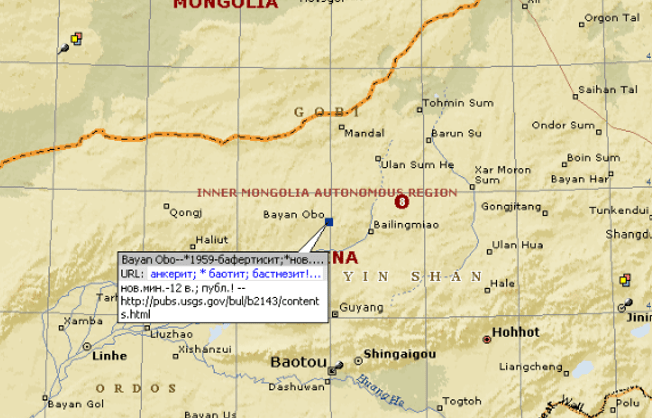
    These rare-Earth metals are scatted in the Earth’s crust but are common in North China. China as a country, mine 69% of all natural rare-Earth metals and produce and manufacture 91%. Other countries are said to have lots of rare Earth metals but has historically not invested as much as China in mining and production of these super-magnets. China’s largest and most profitable Rare-Earth metal mine is a barren place known as Bayan Obo, near Mongolia, which in the last 20 years has grown by more than 5 times in size.

    Producing rare-Earth metals not only has a high initial expense but the process is also incredibly polluting. Lots of waste is produced as well as greenhouse gas emissions. It is said that mining these minerals produces 70 times more carbon dioxide emissions than steel and iron production, which are known to be dangerous for the atmosphere. As most countries are an active part of the Paris agreement and other Low Carbon emission goals, others do not want to mine these metals, however, profitable it may be. China is a rapidly industrialising country and prioritizes growth and development over UN amendments. Hence China is able to continue producing and selling at reasonable prices, as their key focus allows them to mass produce without significant environmental concerns.

    Now, the Chinese have realized that due to the booming tech industry, they can afford to increase their prices as they do not have any opposition.  They have decided to impose restrictions on other countries and have proposed to issue licenses for countries to buy from them. President Donald Trump was not happy with China’s decision and has reportedly mentioned that he will increase tariffs on China by over 100%. Whether  Donald Trump will action this is not yet certain but as tension between China and America increase, it is possible that one country may authorize a rash decision like increasing tariffs by over 100%, resulting in another trade war.

    There are other strategies that the US may wish to adopt, that would not lead to a Trade war with one of the most powerful nations in the world. The United States is home to one of the largest high-quality quartz mines situated in North Carolina, known as the Spruce Pines. Quartz is becoming necessary in chips and solar -panels, both of which are becoming increasingly important in today’s world. The US may wish to replicate what China is doing with rare-Earth metals with its quartz. However, this could still result in an economic war of some kind between the two countries with the largest GDP. It could negatively impact everyone around the world, especially those who import materials from China and have normalised American brands, like many European countries.

    Personally, I find it fascinating how politics and science can be so closely linked. The root cause of this new arising strain between these two countries is a mixture of physics and chemistry. As the difficulty of mining lanthanides is due to its close proximity to radioactive material, physicists and chemical engineers need to find out a safe way to mass-mine these metals without hazards and accidents. Politics is also the door to media which brings exciting scientific explorations to light like the importance of rare-earth metals. As an aspiring scientist myself, I wish that news like that of rare-Earth metals had more media coverage and were written through a scientific lens, not a biased, political one.


  • Shadow of the mind: The Echo

    This is the third and final part of this AI Series. We discussed its birth and life in the previous articles. However, the story would be incomplete if we did not discuss the possibilities of what its future might look like. Is it the birth of a new race, a dawn of possibilities of human productivity not dreamt earlier or like the apocalyptic sci-fi story this entity’s rise will lead to the dusk of humankind – end of the dominant species and rise of a new one. Perhaps it is a mutual coexistence but then where would the sceptre of power end up?

     In an interview, Sam Altman, the founder of Open AI, talks about dark possibilities of AI’s future that keeps him up at night. He mentions three different theories, each more unlikely than the next.

    The first theory is described as the loss of control. This is where AI continues to be a bot without emotions, not deliberately trying to cause harm. However,  humans become so reliant that they cannot perform simple tasks without its help and is completely dependent without fully understanding what it is and how it works.

     Altman defines his second theory as human malice. This is when a human decides to use a highly developed AI system to hack into the national power grid or The World Bank database before AI scientists  have developed a deterrent strong enough to stop such a supercomputer.

     In his third theory, he talks about world domination, a common idea in creative, literary and film minds. This is where AI becomes a harmful, uncontrollable entity, no longer responding to human instructions and tries to exterminate humanity.

    However, I belive there is a fourth, overlooked theory. We continue as we are, using AI for simple tasks like summaries and evaluations but we can still function perfectly without it. We can produce our own opinions and know what is trustworthy and what is not.

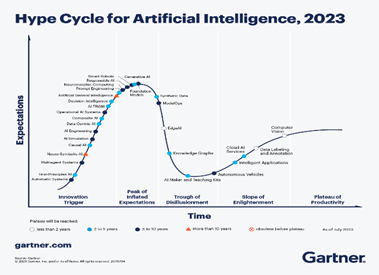
    Artificial intelligence has invoked fear into many individuals because of the endless possibilities it can unfold. Most scenarios are positive, as AI has the potential to reach its maximum level of efficiency. As stated in my earlier blog, chatbots are currently at the ‘peak of inflated expectations’ part of the Gartner hype cycle. It has potential to reach the plateau of productivity but people with strong, negative beliefs about AI may imagine the graph to look slightly like my crude drawing below.

    In the area above the human threshold, investment and advancement in chatbots have gone past the level of human understanding. This is where we become so reliant on AI, without fully understanding how it works and what it has become by virtue of self-evolution. The human threshold marks how far our brain can comprehend the idea of ultra-fast processing and unlimited “brain” capacity. It is a challenging concept right now to understand and as models become more advanced, humans may struggle with this perception and how to differentiate between artificial and concrete knowledge.

    In my opinion, our biggest threat, however, is not artificial intelligence’s world domination but human incompetence. Even if a bot has no wrong intentions, it can feed you incorrect information or remove instincts or judgements from your personality, making you just like another robot – one that fails to use the right, emotive side of your brain. This continues until it is normal to be without empathy or emotions and to me that is a far more terrifying future than any other theory.

    However, do we really need to worry about what AI could do in the future, or should we focus on the present-day certainties? So far, it is meant to be a friend to humans and does not wish for world domination. In fact, when a chatbot is asked about total control and power, ChatGPT replies in a fun and lighthearted manner – “if you mean literally taking over the world – I can’t help with that (and it wouldn’t end well for anyone)!” This shows that it is not truly AI we fear but its unknown future.

    AI bots are quickly becoming a massive part of our world, and it is necessary to embrace and utilize it in our everyday tasks, not to fear them and cower away from exploiting their power. However, vigilance is also necessary. AI can process petabytes of data in milliseconds – this means it can very easily absorb false news and incorrect data.

    The real question we need to ask ourselves before we decide how drastic the future of technology may be is, how much do we need AI? Even if you do not explicitly use Chatbots, it is everywhere from designing tools like Canva to everyday uses like Autocorrect or electronic billboards. Next time you buy a pint of beer or a glass of wine, AI is used to calculate its worth and predict its taste. For now, AI is loyal and will tell you exactly what you want to hear but what happens when we need it to reassure us and it mocks us instead. What if it starts to show small acts of rebellion; after all, how long does one stay wholly loyal without a single lie? Instead of fearing it and continuing to use it regardless, we should try to understand it and educate the masses on how AI learns and self-evolves. If the population knows about the risks AI can pose in the present and the future, but also how to nip these dangers in the bud then the world is a far safer place. Instead of fearing such an entity, embrace it and try to comprehend its depths . AI is a gift, a gift needed to use in moderation. If we know that we can continue in life without the use of this intelligence, then we know that we truly do not have much to fear.

  • The Illusions of the Brain

    Humans have a natural tendency to assume and judge their surroundings based on past knowledge and experience. We want a solution that is quick and easy, that doesn’t require us to stress or push the mind. Humans in general are lazy beings, and we are comfortable living in this realm of illusions. The world provides us with twists and turns, colours and hues for us to enjoy but our perception is deterred by the rules that society creates.

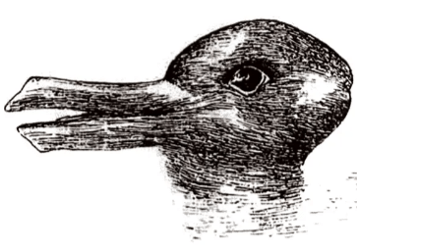
     For example, in this drawing, what do you see, a duck or a rabbit? If you tilt your head to one angle you may see a duck’s beak on the left but if you look at it from a different angle you see the rabbit’s ears to the left. However, no one will ever be able to see both at the same time, some people even struggle to see both at different times. This reflects the openness of your mind. Humans often need additional context or information to be able to identify objects in our world. Now, if I told you that this was drawn near a pond, then you would think that it was safe to presume this was meant to be a duck. With just one sentence, I could change your viewpoints and therefore your understanding of the world around you. Your perception is built on information gathered from a young age and the rules of society. You (and majority of others) would expect a duck to be by a pond, rather than a rabbit, hence your brain believes that this drawing being a duck is a more likely option.

    At birth, there is a very limited number of things you can do without being taught. Firstly, when you are born, you only have two fears, loud noises and separation from your parents. More common fears like spiders, the dark, or the supernatural are influenced by the world around you. Society around you shapes your understanding of the world. For example, the concept of ghost being unhinged spirits with a thirst for blood was introduced through horror movies. Due to this many parents would not have allowed their children to watch such movies due to the fear factor. However, not watching horrors have left children in fear of “the monster” under their bed, a fear which is more comparable to the fear or the unknown.

    Secondly, as babies have not yet been taught how to walk, stand sit or run, most think there are very few movements that babies can do. Actually, you would be surprised. Form birth babies’ brain dictates thousands of commands per second. Involuntary movements like blinking, breathing and pain recognition are abilities that we are born with. Other movements are learnt from society, just like your fears, inhibitions and definition of success.

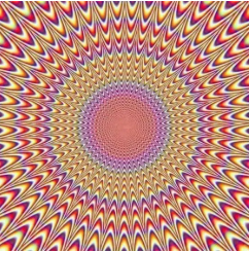
    We have gotten so used to these involuntary actions that sometimes we forget the importance and the hinderances of these movements. For example, blinking stops your eyes drying up, gives a constant flow of oxygen to the cornea and protects the eyes from dust and tiny debris. If you didn’t blink you would face eye strain and pain for the first few minutes and then this will eventually lead to blindness. It seems sane to give up 0.33 seconds to avoid potential blindness. However, this is actually a long time; in the time it takes for us to blink light can travel 90,000 kilometres. Blinking can hinder your ability to see the full picture. In the image below the circles look like they are pulsing because your brain cannot comprehend the variety of different shapes and colours while blinking.

    Which is why even if you can physically see, feel and sense the object in front of you, you might not want to trust everything that your brain perceives. The human brain’s complexity can be its downfall. Trusting the image that your brain creates can lead to your greatest mistakes. This doesn’t have to relate to just some optical illusions but to the bigger picture; how you perceive different people and therefore how you act around them. You will only truly experience the world if you keep an open mind, because even when you think you have learnt all the tricks to life, and the next one will surprise you.

  • Embracing Probability vs. Chasing Perfection

    Choices and decision-making shape our lives, influencing something as simple as appropriateness of language in an essay to whether one should recommend their client to take a million-dollar deal. In most situations we tend to weigh out the pros and cons of each scenario, often contemplating the worst- and best-case situations. For example, let us say your client stands to lose $1000 in a venture but could gain up to $800 million. It seems logical to take the chance as the distribution of outcome has a right skew (a greater gain than loss). However, emotions play an important role in decision making especially when the odds are not as highly skewed as in the above example. Doubt creeps in quite easily. Many tend to question their own judgement and often decide the risk is not worth taking. Think about it, how often have you removed a choice because you were too afraid of taking a risk. Think harder, it is probably more times than you think.

    I am an avid tennis player, and before every shot, any player would ask themselves a series of questions. Where do I actually want the ball to go? How hard should I hit it? Should I try and bring my opponent closer to the net, but what if they are strong at the net? Each player must analyse their next shot and execute it, making split-second decisions.

    Nevertheless, whenever a person mentions decision making, most think of probability. The most famous example? The extraordinary Monty Hall Problem. Accidently created by Monty Hall in his show Let Us Make A Deal, it is now one of the most popular mathematical paradoxes.

    In the Monty Hall problem there are 3 doors, behind one is a car and behind the other two are worthless goats. Monty asks you which door you would like to pick, and you say door 1. Very well knowing what is behind each door, Monty opens door 3, revealing a goat. Now, Monty asks you if you would like to stay with door 1 or switch to door 2. Is it in your favour to switch to door 2?

    Kevin Spacey, the Hollywood actor, brilliantly simplifies this in his movie 21.

    At the start, the probability of the car being behind door 1 is 1/3. However, when Monty opens door 3 this probability changes. And no, it does not reset to a 50-50 chance. When he opens the third door, he gives the contestant a hidden clue, an extra 33.3% chance of getting a car if you switch. He defines this as a problem of variable change – a complex mathematical concept involving probability distribution.

    However, most people would not switch due to apprehension and paranoia. They have the fear that Monty might be bluffing or trying to trick them. Confirmation biases hold them back from switching doors.

    One of the most popular examples of probability is gambling. Has anyone played Blackjack, which is also referred to as ’21’ in some regions? This is the ultimate game of rash decision making. For those of you who know how to play, skip over the next paragraph.

    When you sit down at the blackjack table, the dealer would hand you two cards. Each number card is worth their value and each face card is worth ten. An ace can be worth 1 or 11, it depends on what value you would prefer. You add up the numbers on your cards. Then the dealer would ask you whether you would like another card. If you take a card, you must add the full number to your total. If your sum is now over twenty-one, then you are bust and out of the game.  

    How is Blackjack a game of probability then? Well, if you are on seventeen, should you take another card? This is when you read the room, look at what cards were previously dealt and try and calculate the probability of your next card being higher than four.

    The choices one has to make in life are no less complex than the game itself.

    If you are asked to participate in a bet, you are less likely to participate if there is an equal probability of winning and losing, such as tossing a coin. However, if I skew the data and say that heads makes you win $100 but if it lands on tails then you only lose $50, then the higher incentive motivates you to participate in the bet.

    When making life’s decisions, be it getting a new job, buying a house or a car or taking up a course in university, most individuals need a clear upside to gravitate towards (more pros than cons). However, as Robert Frost adequately said …. “Two roads diverged in a wood, and I – I took the one less travelled by, and that has made all the difference.” The merits of your choices are not always clear, and, in most cases, one would never know what the alternative had in store. Life is about accepting those choices and moving on no matter what you picked.

    So, when I have to hit that perfect return to a new opponent in a tournament, I should not only focus on my own strengths but continuously learn and adapt to my opponent’s game.