Tag: physics

  • Building Our Future

    This is the final blog in this trilogy on the fascinating world of quantum physics, and yes, quantum mechanics has opened my eyes to a whole dimension of possibilities. In fact, quantum mechanics is a field of science that we use all the time. If I am being honest, it is probably something that we rely on a bit too much. So, what is the biggest use case of quantum physics in today’s day and age? Quantum is responsible for all the buzz around AI. All the top companies like Microsoft, IBM and DeepSeek are working on a branch of computing called quantum computing that can not only help progress AI but do things that even normal supercomputers would find impossible.

    Quantum computing is an emerging field of computer science that harnesses the unique qualities of quantum mechanics to solve problems beyond the ability of even the most powerful classical computers. It can solve problems that a normal computer could never solve, in a matter of months. They are being used for complex tasks that we could never imagine understanding, for example, to cure cancer through simulations or representing protein folding for doctors and biologists respectively (both of which I have been told are very complex areas of science). Both of these issues were considered impossible but necessary to tackle and now with the help of these super computers, the possibility dawns closer.

    Quantum computers have two main responsibilities: modelling the behaviour of physical systems as well as identifying patterns and structures in information; something humans and computers can do, but the efficiency of a quantum computer is unmatched.

    The four most important principles when thinking about quantum computing is superposition, entanglement, decoherence and interference. The most important of which is superposition, which derives from the basics of quantum mechanics, the theory of Schrodinger’s cat. The principle of superposition is when two or more waves overlap, the resulting disturbance is equal to the sum of individual disturbances, but each wave does this without affecting one another which means their characteristics stay independent. Simply speaking, imagine touching the surface of a lake at two different points at the same time. The waves would spread outward until they eventually overlap. This is a superposition of water waves, but this same concept can happen with any waves. In mathematical terms it is a similar concept to how a square root can have two possible solutions, e.g. the square root of 9 can be 3 or -3.

    When an electron is in superposition, its different states can be thought of as separate outcomes each with a different probability. However, the outcome is only known until it happens which is when the superposition collapses. It is science’s way to be able to exist in multiple different states at the same time.

    Sunlight itself is a superposition of light. White light which we see from the sun and most man-made light sources, is a superposition of all the colours. The formation of a rainbow occurs when the superposition collapses as the light is refracted through rain droplets. There have been many experiments to prove this idea, theoretical and physical. The most famous example being the Double Slit Experiment carried out by Thomas Young.

    Superposition is enormously important in quantum computing as this is how these machines store data. Rather than storing data in a bit, the smallest unit of data represented by a 0 or 1, they store data in qubits. These qubits are often created by manipulating and measuring quantum particles specifically photons and electrons as they are very small. A qubit is special as it can store data as a 0 and a 1 until it is measured. Therefore, the possibilities of storage can be 0, 1, 00, 01, 10, 11. As you can imagine, if one qubit holds so many combinations, and each combination represents a bit of data, then you can store vast amount of data with the same number of bits. When someone wishes to access this data, the multiple states collapse to form one single binary bit possibility, where it can be registered as a 0 or a 1.

    Quantum mechanics is a growing part of our world and frankly where all the new innovations and discoveries lie, as well as the fascinating new world of AI. Qubits could be the secret to an eco-friendlier way of storing data without thousands of litres of water wasted cooling the data centres. If like me, you are interested in science mixed with two of the most relevant subjects, climate change and AI, then this is where our future understanding lies. Quantum mechanics is a fundamental part of all modern studies, and I believe that quantum computing in particular is a field that requires more great minds.

    If you found this interesting and would like to read more on the subject I would recommend these websites;

    What Is Quantum Superposition? – Caltech Science Exchange

    Principle of superposition | Definition, Examples, & Facts | Britannica

    What Is Superposition? (Definition, Examples) | Built In

    What is a qubit? | IBM

    What Is Quantum Computing? | IBM

    What is Quantum Computing? – NASA

    Difference Between Bits and Quantum Bits – GeeksforGeeks

  • Particles Beyond Reality

    SPOILER ALERT: This blog is the theoretical context to my third blog in this trilogy. If you are confident with fundamental particles in quantum mechanics and the theories around empty space, please read my third blog, Building our Future.

    Everything around us, from stars and planets to the screen you’re reading this on, is built from a collection of fundamental particles. While quantum mechanics revealed that light and energy behave in unexpected ways, it also opened the door to a deeper understanding of matter and particles itself. For centuries, atoms were believed to be the smallest building blocks of matter, but we now know different. Beneath them lies a hidden world of quarks, gluons, leptons, and quantum fields – particles, and forces so small and strange that they challenge our perception of reality itself.

    In the early 1960s, it was proved that protons and neutrons were not the fundamental particles that we thought they were. Instead, they were made up of even smaller particles known as quarks. It is said that at the point of the Big Bang, only quarks and leptons (electrons) existed. These quarks then fused together to form larger particles, protons and neutrons. Along with the electrons, the first element, hydrogen, was created.

    There are 6 flavors (types) of quarks. The two most common ones are an up quark which has  a charge of 2/3 and a down quark with a charge of -1/3. A proton is made up of 2 up quarks and 1 down quark as it has an overall charge of 1. (+2/3 + 2/3 − 1/3 = +1). A neutron is made up of 1 up quark and two down quarks as it has an overall neutral charge. (+2/3 − 1/3 − 1/3 = 0). There are also strange quarks and bottom quarks both of which have a charge of -1/3 and charm quarks and top quarks both of which have a charge of +2/3.

    Quarks fuse together to form proton, neutrons, kaons, or other strange particles (hadrons). A strange particle is the umbrella term for all groupings of quarks as quarks never exist in isolation. They come in two forms, baryons, or mesons. This is because each quark can come in 3 ‘colours’, red, blue, or green. They are not actual colours as quarks are smaller than the wavelength of visible light, but they behave in a similar way. Nature, however, prefers colourless combinations which is why all the colours join together in the electromagnetic spectrum to make white light. Quarks do something similar. Blue, green, and red quarks fuse together to form a baryon. Here the colours cancel out leaving a ‘white’ baryon. Protons and neutrons are types of baryons.

    Quarks can also fuse with an antiquark of the same colour to form a meson. Antiquarks are the antimatter counterparts of quarks. They have the same mass as their corresponding quark but possess opposite properties, such as electric charge and colour charge. For example, while an up quark has a charge of +2/3, an anti-up quark has a charge of -2/3. When a quark and an antiquark bind together through the strong force, they form a particle known as a meson. The colour charge of the quark is cancelled by the corresponding anti-colour of the antiquark, producing a colour-neutral particle. Examples of mesons are pions and kaons. A pion is 270 times heavier than an electron and a kaon is several times heavier than a pion.

    The strong force becomes stronger as quarks are pulled apart which is what makes them unique. Unlike gravity which gets weaker when two objects are further apart; quarks actually behave in an entirely opposite manner. Gluons are massless elementary particles, and these are the particles that bind quarks together through the strong force. Shortly after the Big Bang, quarks and gluons existed in an extremely hot state known as plasma. The pressure and temperature were so high that these fused with leptons to form hydrogen. These hydrogen atoms then fused together through nuclear fusion to create heavier elements.

    If the strong force is carried by gluons, and all forces have a particle carrier then what about gravity? This question led physicists to find the hypothetical particle the graviton. They mediate the force of gravity and along with gluons and photons these particles do not feel gravity as they are massless. This was an influential discovery as before this most scientists believed that gravity was an exception to all forces, however, a big challenge remains. No graviton has ever been detected, which means they remain a mere theory.

    This particle highlights how much we still have to learn and discover, not only about particles but about something that we thought was simply nothing. After 1909, due to Ernest Rutherford’s alpha particle scattering experiment scientist believed that most of an atom was empty space as nearly all of the alpha particles passed straight through the atom. However, later experiments discovered that empty space was not empty space at all. It is full of quark and gluon fluctuations.

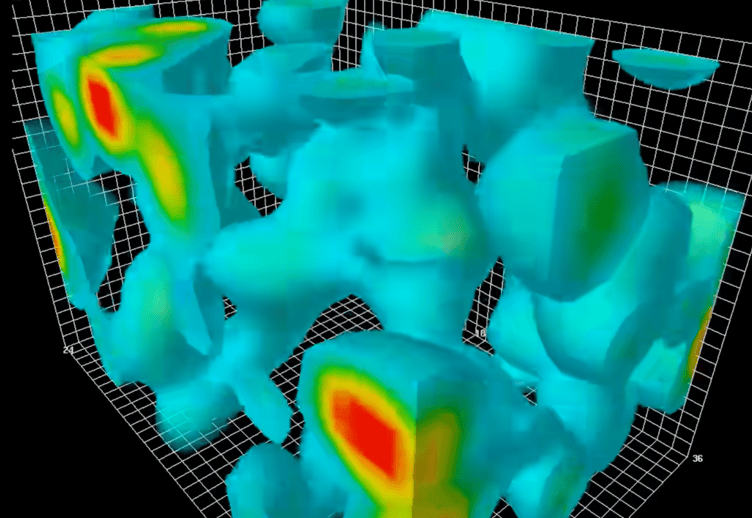
    Professor Derek Leinweber of the university of Adelaide designed a simulation to show these fluctuations. He used a supercomputer which is one of the fundamental uses of quantum mechanics. This is a map of the energy densities of gluon field fluctuations. Where there are red spots the energy density is very high, and the lighter green spots have a lower energy density. These fluctuations happen so quickly that the frame rate for this simulation is 1 followed by 24 zeros frames per second (1,000,000,000,000,000,000,000,000). The average frame rate for a YouTube video in contrast is 30fps.

    This is a simulation of vacuum alone. It is actually full of these fluctuations happening all the time. However, it is possible to create a true vacuum by clearing out all fundamental particles but a little hitch in the plan, is the amount of energy required to actually do this. And even if you did manage to acquire this much energy, you would find that a truly empty vacuum is unstable and would resort to its stable form with field fluctuations very quicky.

    This demonstrates just how poorly we understand the universe around us. Quantum mechanics has opened the door to an entirely new realm of mysteries. It forces us to rethink our assumptions and view reality from a completely different perspective. After all, how many people would imagine that something as seemingly empty as a vacuum is actually filled with fundamental particles and quantum activity? As strange as these discoveries may seem, they are only the beginning. Our journey into the quantum world has just begun, and its greatest secrets still lie ahead. We are yet to find out how they fit with classic Newtonian physics or even our modern lives, but quantum mechanics has proven useful in new inventions which would not be possible if not for the laws of quantum.

  • The Beginning of the Unthinkable

    The first blog in a three part series on the modern marvel of the century: quantum mechanics.

    But what exactly is quantum mechanics, and why has it fascinated scientists for over a century? From the strange behaviour of particles such as photons and quarks to the possibility of revolutionary technologies like quantum computers, quantum mechanics lies at the centre of some of the most exciting ideas in modern science. Understanding it means stepping into a world where the rules of everyday life no longer seem to apply. Albert Einstein himself had a love-hate relationship with the idea. It challenges you to forget everything you think you know and embrace the unthinkable.

    Quantum mechanics is probably the second most sought-after field in physics, following astrophysics. It is where ground breaking theories emerge, strange ideas challenge our understanding of reality, and physicists dream of having a discovery or theory named after them.  Recently, quantum computing has pushed quantum mechanics further into the spotlight, with new breakthroughs and mysteries appearing almost every year.

    Quantum mechanics is the description of the behaviour of subatomic particles such as photons and electrons, how they work and how they interact with light. Richard Feynman, a physicist in the mid-1900s said that particles are particles (not waves) and they can hop from place to place with a particular probability. To calculate the probability that the particle will be at a different place later is as follows: assign a probability to every point in the room and then add them up. This is called the path integral formulation and can be used to calculate the probability of a particle travelling from point A to B. If a particle travels from one corner of a room to another, the path integral formula can be used to calculate what the probability of that particle moving to another point in the room is.

    Before the turn of the 20th century, scientists believed light was a transverse wave and particles could never be waves. According to Newtonian physics a hot object should emit infinite energy at short wavelengths. Red light gives out some energy; blue light gives out more energy and tiny wavelengths like ultraviolet gives out huge amounts of energy. Their math stated that a hot object should pour out endless energy in tiny wavelengths. However, there are some clear problems with this theory as it would mean some objects would have infinite energy which means, that energy would come from nowhere. We now know that this would go against the theory of conservation of energy and evidently made no sense. Their mistake became known as the Ultraviolet Catastrophe.

    Max Plank in 1900 had a bold idea. He said that light energy does not come in smooth endless amount but instead it comes in tiny packets, called quanta. For example, you cannot use half a coin, you must use a whole coin. This idea meant that very tiny wavelengths need bigger energy packets (quantum), which meant that shorter wavelengths emitted more energy.

    Einstein expanded on this further. He thought, what if light itself was made up of quanta. The colour of the light tells you how ‘energetic’ it is. The shorter the wavelength, or the more purple the colour, the stronger the packets. So, in theory a blue hot iron would actually emit more energy than a red-hot iron. Einstein used this to explain the photoelectric effect. This is when shining dim blue light on metals could knock electrons out, but very bright red light sometimes could not. This led Einstein to believe that the energy was not about the total brightness, rather about how strong each tiny packet is. The blue light had a small number of large packets, and the red light had a large number of small packets. He called these energy packets, photons.

    Photons are a massless particle which means they do not feel a gravitational attraction. They move at the speed of light and have no rest mass; this means that a photon is always moving at the speed of light. These photons sometimes acted like waves and sometimes acted like particles. This meant that tiny particles could be in many possible states at once and its state only becomes definite once measured.

    This arises from Schrödinger’s theory that a cat can be both dead and alive at the same time. He imagined that a cat is placed in a box with radioactive material that has a 50% chance of killing the cat in the next hour. At the moment just before you open the box, the cat is both alive and dead at the same time. It is only once you open the box that the cat’s single state is visible. This quantum theory perturbed Schrödinger so much that he gave up physics and moved to biology.

    Quantum mechanics began as an attempt to explain strange mysteries about light and atoms which normal Newtonian physics simply could not explain, but it ended up completely changing our understanding of reality itself. From photons and wave-particle duality to uncertainty and superposition, quantum theory reveals answers to problems that had bizarre solutions earlier. Although many of its ideas seemed confusing at first, quantum mechanics has helped scientists build technologies like lasers, computers, and MRI machines, while also opening the door to future innovations such as quantum computing. Most importantly, it reminds us that not all questions are answered and certainly not all questions have arose.

  • Our Perception vs. Reality

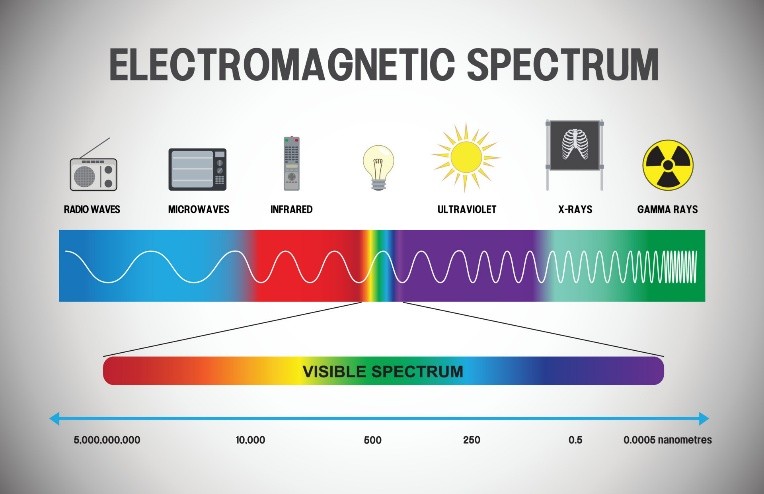
    Look around you. You can see millions of colours, different shades, hues and saturations. However, have you ever thought, what exactly is colour? The Oxford dictionary states it as the property possessed by an object of producing different sensations on the eye as a result of the way it reflects or emits light. In simple terms it is how the absorbed, reflected or transmitted white light enters your eyes. Visible light is part of the electromagnetic spectrum, with red having the longest wavelength and violet light having the shortest.

    The visible spectrum covers a vast range of colours and was originally found by Sir Isaac Newton in an experiment he conducted in the mid-1660s. He tried to split white light through a prism into the entire electromagnetic spectrum, but naturally he could only see the visible part. He discovered that there were 6 main colours and an infinite range in between. The 6 main colours were: red, yellow, green, blue, indigo and violet. He added orange as an afterthought, simply because he preferred the number 7. Newton’s experiment is an excellent example of the subjectiveness of colour.

    One thing which Newton got slightly wrong was how many colours in the visible spectrum we can actually see. Even though it is known as the ‘visible’ spectrum, we chose not to see some colours. This is simply because our eyes are too sensitive to view the complexities of the world. My favourite example of this is the sky. Have you ever stopped to think, out of all colours, why is our sky blue?

    Rayleigh scattering occurs when the shorter wavelengths of light are scattered in all directions because of the small Rayleigh particles. The colours with the shortest wavelength is purple followed by blue yet we see a blue sky, most of the time. Why is this? Why do we not see a purple sky? Simply because our eyes are too sensitive and do not react well to violet light. Honey bees and other animals which can see ultraviolet, see a purple sky as their eyes receive violet light well. However, for many animals like deer, sharks and whales, the sky can seem grayish blue as they do not have the same number of colour receptors as us. Some birds, on the other hand, have far better eyesight than most species can see the sky in a vivid and colourful blue that we cannot see or imagine.

    Now, I want to conduct a thought experiment. Close your eyes and think of a colour, any colour; but it must be one you haven’t seen before. Go on, pause your reading and really have a try.

    However much you try, you will never be able to think of a new colour. Our brain simply cannot create something that we never have seen and never will be able to see. This is the reason why we could never fathom how birds saw the sky.

    Our perception of colour is based on the combination of three types of cones in our eyes which respond differently to different wavelengths of light. The brain processes these signals to create our subjective experience of colour. Therefore, while we can try to describe colours we have never seen with words, we cannot create or imagine colours that exist outside of the visible spectrum.

    Some women are born with four cones which means they can see a wider range of colours than any other being. Nevertheless, even with three cones, most women can see a wider arrangement of colours. And then there are those who are severely colourblind, during daytime they may see a limited array of colours, but it is proven that they have far superior night vision than any other human.

    This highlights just how subjective colour truly is. Even within our own species, we perceive colour in very different ways. When we begin to consider how other species experience the world, we must ask what does the world actually look like? If each individual sees colour slightly differently, can we really claim that colours exist in any absolute sense? These questions may never be fully answered. After all, how can we definitively explain something that is entirely dependent on perception? Like a paradox, it is something that invites endless thought but no action.

  • A Timeline of Innovation

    A trip through the wonders of technology

    My dad is a strange man. Normally, he is not superstitious and never crosses his fingers when he sees a black cat, or salutes to magpies, and tries to open umbrellas indoors! However, when we visited Santa Croce in Florence, at Galileo’s tomb, he suddenly broke character and asked Galileo to bless me with some of his intelligence.

    Galileo Galilei was an Italian physicist who is credited with the invention of some of the most remarkable scientific tools in history, pioneering the laws of motion and the concept of inertia which Isaac Newton later built on. He is also known for his laws on falling bodies which states that bodies, no matter their mass when dropped from the same height will fall at the same velocity in a vacuum. A physicist and astronomer, he is credited to have invented the most powerful telescope of his time. Fast forward today, telescopes are massive lenses in open fields and sometimes even in space, which can see objects thousands of light years away, but Galileo’s telescope was the first of its kind. With his small, yet vastly more powerful than earlier telescopes he could see the moon’s craters and the phases of Venus. This supported the heliocentric model of the solar system proposed by Nicholas Copernicus, where the Sun is at the centre of our solar system and planets revolve around it. This idea was not popular with the Pope and most Christians at the time, as the Bible states that the Earth is fixed and lies at the centre of all things. Which is why in 1610, when Galileo made his ideas public, the Pope’s men interviewed him and when Galileo would not back down from his truth, they put him under house arrest for the remaining 9 years of his life. It is only in 1979 when Pope John Paul II officially declared that Galileo was right.

    His invention of the modern telescope led to a lonely final decade of his life but was it worth it in the end?

    One of the largest ground telescopes is located in the Atacama Desert, Chile and is used for exploring hidden corners of galaxies. It has already captured images of new born stars. This telescope not only helps us detect the life span of neighbouring stars but also at what rate the universe is growing. Due to their large lens size, these telescopes can see objects millions of light years away. For example, the brightest star that we on Earth can see, is called Sirius and is located 8.6 light years away. This means that when we look at Sirius, we are looking at what the star looked like over 8.6 years ago because the light from the star takes time to travel to us.

    In January 2022, James-Webb, a space telescope with a 21-foot lens, was released into space. This telescope broke the record for the furthest celestial body detected; a galaxy 13.5 billion light years away. James Webb captured this image while the galaxy was still at a young age and astrophysicists believe that this galaxy was born only 280 million years after the Big Bang. The James Webb did not just take a photo of a galaxy, but it travelled 13.5 billion years back in time; to a time when Earth didn’t exist and hydrogen was still fusing into helium. It was a large step forward for the space industry, as it produces some of the most powerful and detailed images of faraway corners of our universe. Imagine witnessing stars being devoured by supermassive black holes and the collapse of giant stars into dense neutron stars. These findings have shaped our understanding of familiar concepts like gravitational attraction but also new ideas like spaghettification (what happens to an object when it enters a black hole).

    However, the most remarkable achievement of this particular telescope is the discovery of potential life. The James Webb telescope analysed the chemical composure of K2-18b, a planet 700 trillion miles away. Then scientists back on Earth inspected to find a large number of molecules in its atmosphere which on Earth can only be produced by living organisms. Due to the large proportion of these molecules, scientists believe that if this planet is home to organisms, it is teeming with life. K2-18b is two and a half times bigger than Earth but otherwise remarkably similar; it is a water world, thought to be covered entirely by oceans. The evidence collected by this one telescope is growing, making it more and more likely that there is life in those depths.

    So, we thank you Galileo for sacrificing your freedom. Without it, our knowledge of the entirety of the universe would be limited to still trying to prove the heliocentric model. Young curious minds like mine may never have been drawn to star-gazing. I wish you could see what your small, 51-millimetre telescope has inspired and what information has been found because of it.

    Maybe, my dad was right. A man who started the domino effect that led to these new findings deserves to be treated like a God. On behalf of all qualified and aspiring scientists out there, bless us with knowledge, integrity and innovation like yours.

  • Quest to a Perpetual Hourglass

    Secret to the universe’s greatest mystery

    It is the most common noun in the English language and used in a range of proverbs. It flies when we have fun and along with the tide it waits for no one. You try to race against it and often wish you had more of it. Time is one of our universe’s greatest mysteries and physicists spend their lives trying to understand even a fraction of it.

    Wouldn’t it be cool to go into the future, have a peek into your successes and failures, come back and fix it all? In theory, it is surprisingly simple; all you must do is travel at the speed of light. So, why hasn’t anyone taken a trip through time? Actually, everyone has. You, your neighbour, your local newsagent, astronauts and Usain Bolt. The only difference is how far ahead in time. This is all because of time dilation, the difference in elapsed time. Elapsed time simply means the amount of time that passes from the start to the end of an event. For example, if you had two identical clocks, one stationary and another one moving close to the speed of light, the moving clock seems like it is measuring a shorter time or moving more slowly relative to the stationary clock. This applies to other bodies as well. Humans have an internal clock and the faster they move, the slower their internal clock runs, allowing them to travel forwards in time.

    For instance, if you race against Usain Bolt in a 100m race, he will reach the finish line a couple of seconds before you do, well, assuming you are really fast! This means he has reached the future quicker than you have as he has travelled a fraction of the speed of light faster than you. The closer you go to the speed of light, the more apparent are the effects of time dilation. Astronauts aboard the ISS, which travels at 0.000002% the speed of light, experience time dilation on a measurable scale. Astronauts coming back from a 6-month mission are actually 0.007 seconds ahead of us. As the average human reflex speed is 0.21 seconds, this doesn’t make a massive difference. However, some cosmonauts like Oleg Kononenko, a Russian astronaut who has spent a whopping 1111 days in space might be a couple of seconds, ahead in time.

    If you (a person who hasn’t experienced time dilation on a measurable scale) and Kononenko were standing next to each other at a shooting range, Kononenko would see each shooter hit their target 2-3 seconds before you do. Depending on the distance between the shooter and the target, he may see the target being hit before the shooter has pulled the trigger!

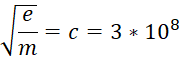
    If a person is able to travel a couple of seconds into the future, then how hard could a couple of years be? Unfortunately, Einstein has made that quite difficult due to his special theory of relativity which states that the speed of light in a vacuum is the same for all observers. This is also where his very famous equation E = mc2  comes from. This can be rearranged to say

    m/s. Therefore, for a small mass, you will need infinitely more energy than is describable to travel at the speed of light. For many humans as well as their spacecrafts, the amount of energy required may be greater than the amount we have in this universe itself!

    Travelling at the speed of light is ruled out but what if I told you that there was another way to travel into the future. A way which allows our feet to be younger than our head. As your feet are deeper in the Earth’s gravitational field then your head, it reaches the future first. Similarly, if you spend an average lifespan of 72 years living in La Rinconda, the highest permanent human settlement, situated in the Andes at an elevation of 5,000 meters, then you would be 0.0025 seconds further ahead in time than someone who had been living their whole life at sea level. The person living at sea level is deeper in Earth’s gravitational field and therefore less time passes for them.

    Everything has a gravitational field strength, however, the heavier the body the stronger its gravitational field strength (g). As the earth’s gravitational attraction is not strong enough to experience time dilation on a measurable scale, one must turn to the heavier celestial bodies. Luckily, there are some bodies that are a trillion times heavier than the Earth. We call these black holes. They are dense and heavy with a gravitational strength so strong that not even light can escape once it has crossed the event horizon, a point of no return.

    A black hole’s gravitational attraction is so strong that if you sit just 10km away from the black hole’s event horizon for 7 years then 7,000 years would pass on Earth. This seems like a possible solution for travelling into the future but there is a catch, like with most laws of physics. Our nearest black hole is Gaia BH1 which lies in the direction of the constellation Ophiuchus. To get near the black hole’s event horizon and back to Earth, one must travel for 3,000 years and that too at the speed of light. As the average lifespan of humans is currently 72 years that is not possible.

    So, if you’re hoping to pick up next week’s test paper or perform the latest trends with aliens from outer space, I’m afraid you have to wait, but it might be for the best. The future is unpredictable, and we do not know whether humans would even be alive in 1,000 years, therefore it is best to stick to dreaming about meeting moon colonies or watching the latest sci-fi movies.