The US and China are at loggerheads – political rivalry fuelled by nationalistic rhetoric has sparked tension between the two largest economies of the world. Their feud about taxes on exported and imported goods has set global headlines and their difference in political ideologies has sent tremors through the media ever since Trump announced ‘anti-communist week on the 7th of November 2025. Amidst all the economic conflicts, a key but comparatively lesser-known battle is that of Rare-Earth Minerals. This battle started in the mid-1980s but has become a far more prevalent issue since President Trump started imposing tariffs earlier this year.
Rare-Earth metals are a set of 17 lustrous, silvery, soft and heavy metals. These are the 15 lanthanides, found at the bottom row of the periodic table, scandium and yttrium. While they are actually not considered to be rare in Earth’s crust, they are not found in high concentration and are spread out widely. They also tend to be found near radioactive metals in the ground making it risky and expensive to mine.
These 17 metals are extremely important in day-to-day life and are used in a variety of applications like smartphones, turbines, speakers, motors, MRI machines and military vehicles: just to list a few examples. They are also used in plane engines where the temperatures are so hot that even ordinary metals would melt. Rare-earth metals are used to prevent the turbines from melting and allow planes to fly smoothly.
Notwithstanding, its most important use is magnets. When used in a compound alongside iron or another magnetic metal, it is the strongest magnet possible. The Neodymium (N38SH) magnet is considered to be the best material for magnets and is not even comparable to ordinary compounds like iron.
These rare-Earth metals are scatted in the Earth’s crust but are common in North China. China as a country, mine 69% of all natural rare-Earth metals and produce and manufacture 91%. Other countries are said to have lots of rare Earth metals but has historically not invested as much as China in mining and production of these super-magnets. China’s largest and most profitable Rare-Earth metal mine is a barren place known as Bayan Obo, near Mongolia, which in the last 20 years has grown by more than 5 times in size.
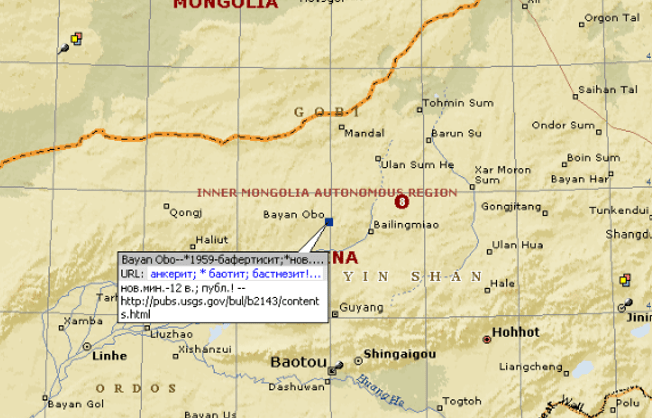
Producing rare-Earth metals not only has a high initial expense but the process is also incredibly polluting. Lots of waste is produced as well as greenhouse gas emissions. It is said that mining these minerals produces 70 times more carbon dioxide emissions than steel and iron production, which are known to be dangerous for the atmosphere. As most countries are an active part of the Paris agreement and other Low Carbon emission goals, others do not want to mine these metals, however, profitable it may be. China is a rapidly industrialising country and prioritizes growth and development over UN amendments. Hence China is able to continue producing and selling at reasonable prices, as their key focus allows them to mass produce without significant environmental concerns.
Now, the Chinese have realized that due to the booming tech industry, they can afford to increase their prices as they do not have any opposition. They have decided to impose restrictions on other countries and have proposed to issue licenses for countries to buy from them. President Donald Trump was not happy with China’s decision and has reportedly mentioned that he will increase tariffs on China by over 100%. Whether Donald Trump will action this is not yet certain but as tension between China and America increase, it is possible that one country may authorize a rash decision like increasing tariffs by over 100%, resulting in another trade war.
There are other strategies that the US may wish to adopt, that would not lead to a Trade war with one of the most powerful nations in the world. The United States is home to one of the largest high-quality quartz mines situated in North Carolina, known as the Spruce Pines. Quartz is becoming necessary in chips and solar -panels, both of which are becoming increasingly important in today’s world. The US may wish to replicate what China is doing with rare-Earth metals with its quartz. However, this could still result in an economic war of some kind between the two countries with the largest GDP. It could negatively impact everyone around the world, especially those who import materials from China and have normalised American brands, like many European countries.
Personally, I find it fascinating how politics and science can be so closely linked. The root cause of this new arising strain between these two countries is a mixture of physics and chemistry. As the difficulty of mining lanthanides is due to its close proximity to radioactive material, physicists and chemical engineers need to find out a safe way to mass-mine these metals without hazards and accidents. Politics is also the door to media which brings exciting scientific explorations to light like the importance of rare-earth metals. As an aspiring scientist myself, I wish that news like that of rare-Earth metals had more media coverage and were written through a scientific lens, not a biased, political one.

 Everyone Wants to Know