Recently, I visited Peru for a once in a lifetime experience. Travelling all the way to South America was a true novelty for me that I do not think will wear off anytime soon. A one-of-a-kind trip like this needed a blog of its own especially as lots of lessons I learnt applies to everyone on a shockingly large scale.
After an exhausting 35-hour journey, we finally arrived at our hotel in Puno, a small town right next to Lake Titicaca, the highest navigable lake in the world. My first thought when I think of our premier night there is how we greatly underestimated the altitude. We left London thinking an altitude of 3900m was easily manageable. We were pretty unperturbed until it came to sleeping. I had never had a worse night of sleep. Even while sleeping I could feel a pounding in my head – a headache that could rival Zeus’s. My family and I had to wake up in the middle of the night and take emergency altitude sickness tablets before our breathing became more regulated and the pounding became a dull throb.
After this oxygen deprived land our bodies were in for a stark contrast, as we headed to the lungs of Earth, the Peruvian Amazon Rainforest. Here we went kayaking down the Madre Di Dios River, an endless river that feeds into the Amazon.
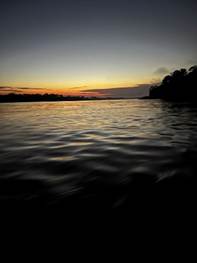
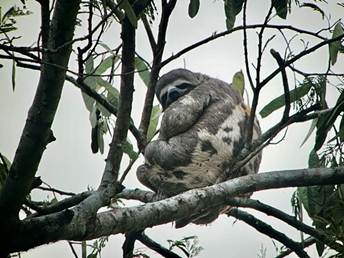
We also went for long walks into the jungle during the daytime as well as a thrilling night expedition. We observed a stunning array of land, river, and lake animals, including cute furry creatures like sloths and spider monkeys as well as more fearsome creatures like the large black caiman and pink-toed tarantula. Riding upstream to see clay licking of Macau and being five times lucky in sustainable piranha fishing will remain etched in my memory for a very long time. It was amazing seeing rare animals that you could never see in England, in their natural habitats. We were sad to say goodbye to Puerto Maldonado and our amazing guide but excited for our adventure starting in Cuzco, where we would start the famous Inca trail.
When we arrived in Cuzco, we had a few days to acclimatise again and enjoy the picturesque city and nearby historic Inca sites. The next day we were hit with devastating news by our travel agent. Due to heavy rain, the campsites of our much awaited 4-day hike on the Classic Inca train to Machu Pichu were completely flooded and unusable in spite of the government’s efforts to fix it as quickly as possible. Not one to give up easily, after much deliberation, we ended up with a bespoke trail – choosing the more challenging, the Salkantay trail followed by 2 days hike on the classic trail to Machu Pichu.
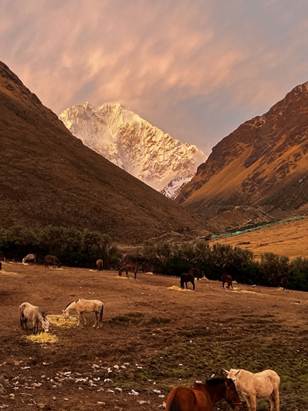
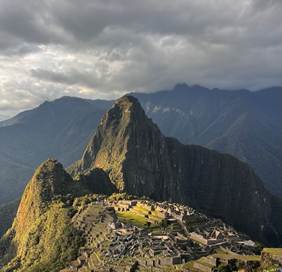
The Salkantay trail’s second day was by far the most gruelling, a 22km hike at 4,650m altitude was no laughing matter. The group even had emergency horses in case any of us became physically exerted. Thankfully, we did not need it and felt an overwhelming amount of accomplishment as we reached our campsite for the night. When we arrived at Macchu Picchu at the end of our long journey through different terrains (alpine tundra, mountains and rainforest), we were tired but also swept away at the sight of such a marvel. We learnt that it was untouched until 1911 when an American explorer, Hiram Bingham III discovered it after gathering information from indigenous locals. Conservation to restore such a historic wonder was continued until it was declared a UNESCO world heritage site in 1984. Now the only protectors are the llamas wondering around the Incas’ greatest wonder. Before we left on this trip, I wrote a blog about the theory behind their spectacular architecture but to see it in person was surreal.
Upon our return we learnt that the untimely rain followed by flooding could have been caused by the El Nino effect. This happens when the surface temperature of the Equatorial Pacific Ocean rises at least 0.5 degrees Celsius above normal for several months. This warming weakens or reverses the usual East-to-West trade winds, allowing warm water to move Eastward towards South America, especially Ecuador and Peru. This causes heavy flooding in South America and can lead to dry conditions in countries like the UK (which explains the multiple heat waves we have had here this summer).
Amidst the trip, also came the devastating news of the Nepal flood. A large section of a glacier – the size of 9 football pitches, near Langtang Lirung collapsed, falling approximately 1,200 meters into the valley below. This glacier collapse generated a massive ice-rock avalanche, which melted rapidly due to friction and impact, producing a sudden surge of water. This water then flowed into the river, where mud from the collapse had already formed a natural dam. The build-up of water caused the dam to break, along with many people’s livelihoods. (If you wish to help out, I am raising money for this cause on my home page so please donate.)
A trip this special made me a storyteller amongst my friends as I told them the stories of my thrilling holidays. All of my friends ask me the same questions, was all those 4am wake ups and long journeys worth it, and my answer any day, every day would be an emphatic yes, most definitely yes!
(All photos taken by me)